A More Effective Approach to Reading
Many children with dyslexia or reading difficulties don't need more literacy apps or phonics practice. They need instruction that works with the way their brain learns, not against it.
Why Some Kids Don't Respond to Typical Reading Instruction
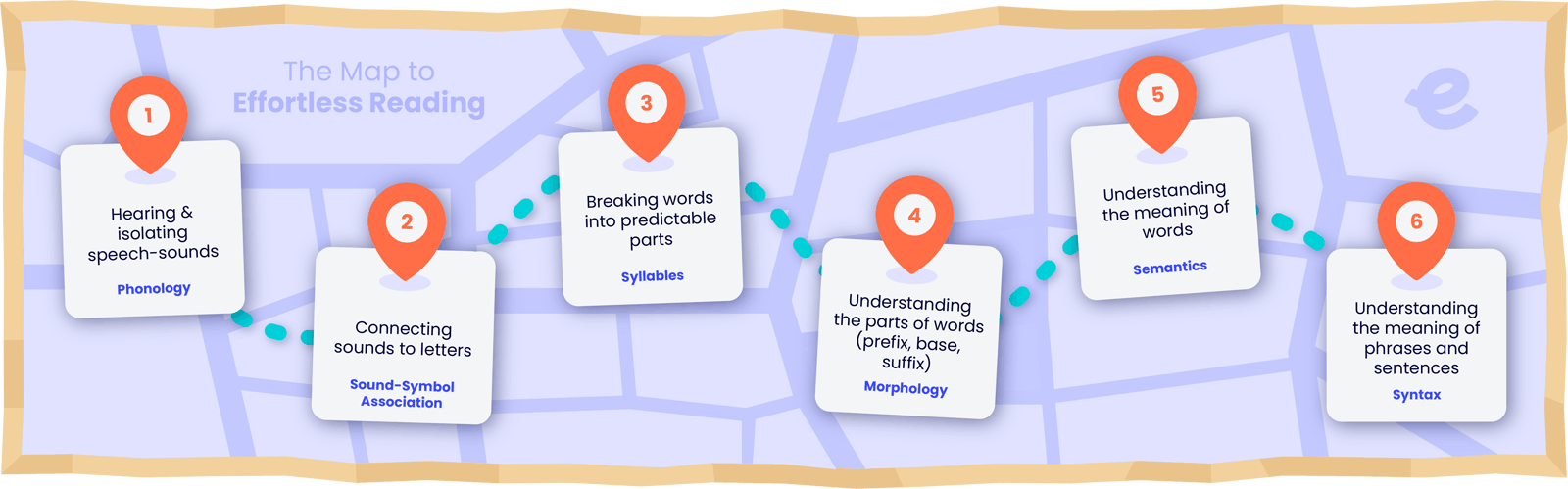
Think of it this way. A typical reader's brain reads almost like a GPS, effortlessly guiding them to their destination. A child with dyslexia or reading difficulties has to build that route step by step, learning the sounds, patterns, and concepts that make reading possible.
The good news is that this route can be built. With the right instruction, struggling readers gain the explicit skills necessary to read with confidence.
What "The Right Instruction" Actually Means
Structured literacy (formerly Orton-Gillingham) is the most researched approach to reading instruction available, and it is the method most recommended for children who struggle to read.
Rather than hoping children will absorb the rules of written language on their own, structured literacy teaches those rules directly. Everything is taught explicitly, in a careful sequence that moves from simple to complex.
Children with dyslexia and other reading difficulties don't absorb reading skills naturally. They need direct, explicit instruction to learn what other readers pick up with ease.
A Custom Curriculum for Kids Who Learn Differently
Lexercise doesn't use grade-level reading, because reading levels don't tell you what a child actually knows. They tell you how a child compares to other kids their age.
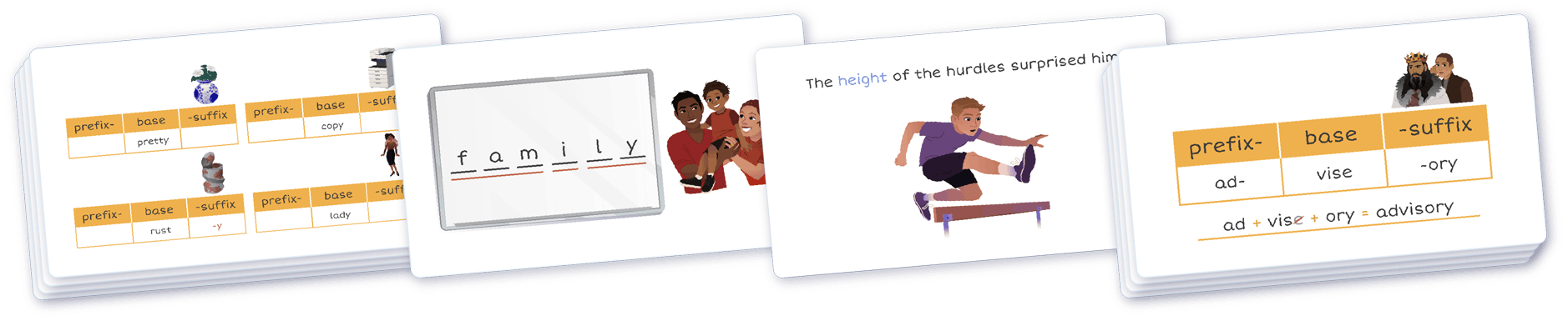
We start by identifying exactly which sounds and patterns your child has already mastered and build from there. The sequence starts with the most foundational building blocks of language and builds steadily forward, through spelling patterns, syllable types, and eventually Latin and Greek roots.
These are skills that will support your child far beyond reading, across every subject and stage of life.
Practice That Feels Like Play
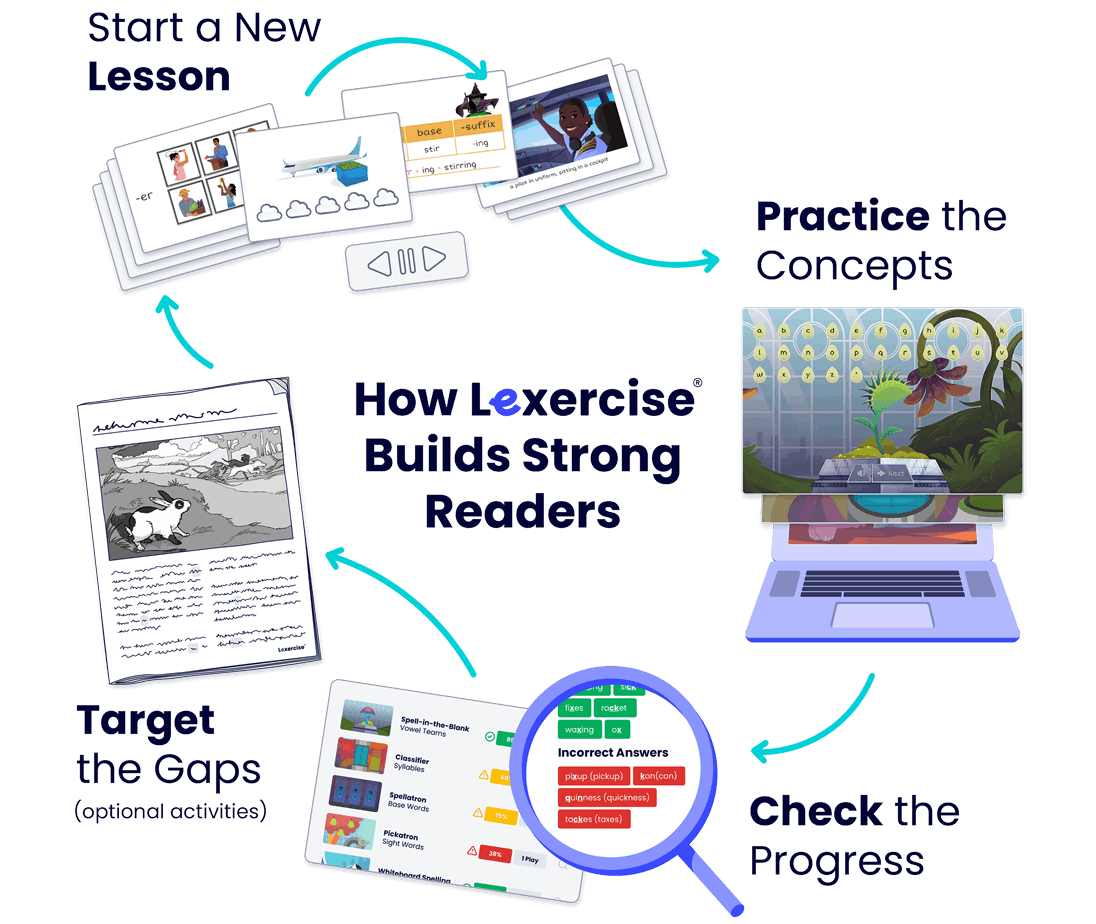
Students practice through short, engaging daily games that adapt to exactly where they are in the curriculum. The content adjusts based on what literacy skills the student has already mastered, so every session feels manageable and every success feels earned.
This cumulative approach gives struggling readers the repetition they need to build lasting reading and spelling skills over time. It just takes 15 minutes a day, four days a week.

Progress You Can Actually See
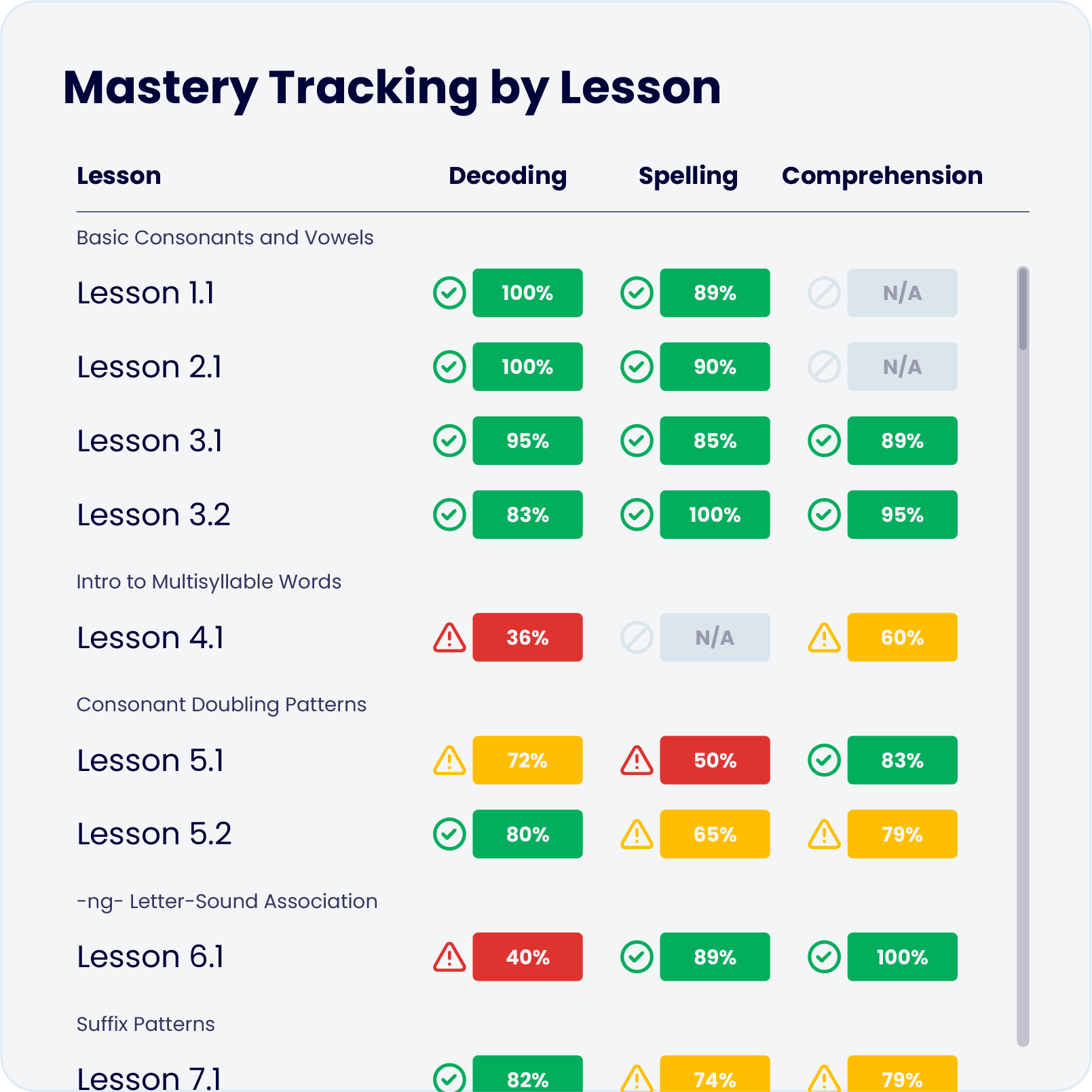
Woven into every practice session are progress assessments your child won't even notice. While they play, the system is tracking whether each concept has truly been internalized, not just attempted.
Progress across decoding, spelling, and comprehension is tracked and visible, so you can see real growth over time and know when your student is ready to move forward.
Because students are responding to hundreds of practice challenges each lesson, they are getting a level of repetition that a twice-a-week tutor simply cannot match.
From Struggling Reader to Confident Reader
Lexercise works for kids who learn differently. Whether you're a parent searching for answers or an educator looking for a proven solution, we're here to help.
Compare our programs to find the right fit, or talk to one of our specialists for more information. Your first consultation is free.