

Reading Comprehension Test
In under 10 minutes, this free test can help identify signs of reading comprehension difficulties.
You can complete it on your own, and your child does not need to be present.
Designed by literacy expert Sandie Barrie Blackley, M.Ed., CCC-SLP.

Signs of a Reading Comprehension Problem
Reading comprehension difficulties can affect how a child understands, remembers, and responds to what they read. Look for the signs below to see if any may apply to your child.
Stronger at Listening
Understands a story much better when someone reads it aloud than when reading it independently
Unrelated Responses
Answers reading comprehension questions with responses that don't relate to what was asked
Runs in the Family
Has a family history of reading, spelling, talking, or writing difficulties
Reading Without Understanding
Can sound out or recognize words but struggles to explain what a passage was about
How Our Test Works
This test allows you to determine whether your child is at risk for reading comprehension difficulties
by using a series of questions that cover word-reading accuracy/fluency and language comprehension.
You’ll rate different aspects of your child’s reading comprehension on a scale from “never” to “always.”
Successful reading comprehension factors: 1) accurate and fluent identification of written words and 2)
understanding the meaning of words and sentences in spoken and written language.

Take the Reading Comprehension Test
Reading comprehension skills vary by age. Select your child’s grade range to load the appropriate test.


Know Exactly Where Your Child Stands
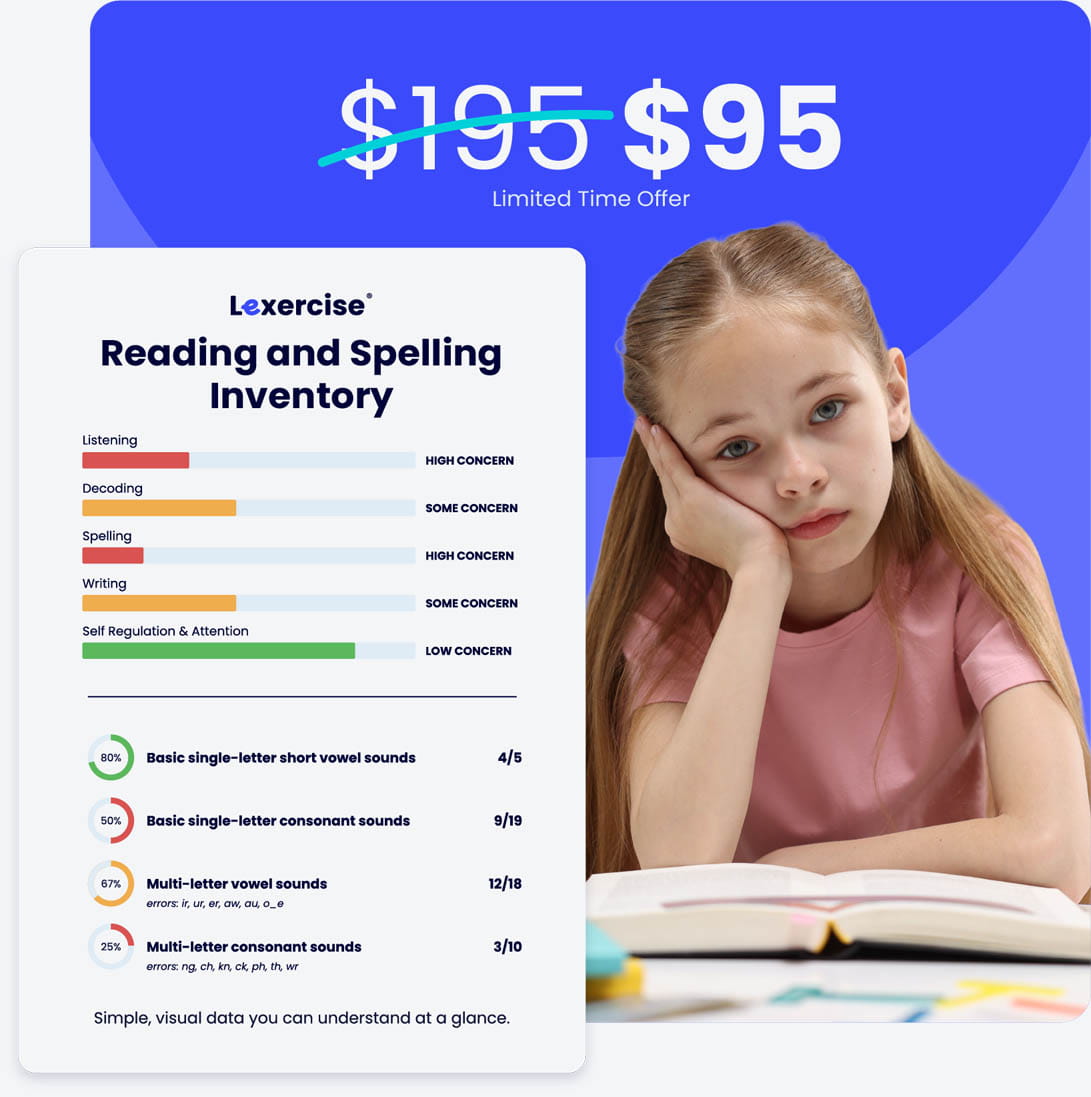
If your child is struggling, our popular Reading & Spelling Inventory tells you exactly what’s going on and what to do about it.
What’s included:
- 45-minute online session with a reading specialist
- Personalized 8-10 page report on your child’s reading and spelling skills
- Clear next steps and practical strategies
Get a $100 discount on the RSI if you sign up for it in the next 30 days. Just include RSI95 in the signup notes.
What Causes Reading Comprehension Problems?
Word-Reading or Decoding Difficulty
When word reading is difficult, comprehension can suffer even when language understanding is fine. Screen for free with our Dyslexia Test.
Oral Language Difficulty
Comprehension gaps can show up in listening before they show up in reading. Screen for free with our Listening Comprehension for DLD Test.
Attention and Focus Difficulties
Dyslexia is a neurological learning difference that makes reading, spelling, and decoding words difficult.
Emotional or Behavioral Factors
Anxiety, frustration, or behavioral difficulties can interfere with a child's ability to concentrate on and process what they read.
Vision or Hearing Issues
Uncorrected vision or hearing problems can affect reading in ways unrelated to language processing. A routine checkup with your child's pediatrician can rule these out. Learn more on our blog.
Limited Vocabulary, Knowledge, or Instruction
Sometimes comprehension struggles reflect gaps in knowledge or instruction rather than an underlying disorder.

Dig Deeper
If this test suggests your child might be at risk for a reading comprehension problem, talking to a Lexercise specialist can help you sort it out. You can also have your child take one of these more specific learning disability assessments to dig deeper on your own: