
Dysgraphia Test
In under 5 minutes, this free dysgraphia test allows you to determine whether your child has a risk for dysgraphia. Using a series of questions, you will be asked to rate various aspects of your child’s handwriting.

Understanding Dysgraphia
Dysgraphia is a condition rooted in the brain that leads to difficulties in writing and spelling. Dysgraphia is often overlooked or attributed to laziness, lack of motivation, carelessness, or delayed visual and motor processing (Berninger and Wolf, 2009).
You are taking the first step by identifying your child's dysgraphia symptoms. Dysgraphia treatment can be tailored to each child's age, symptoms, and unique factors. A skilled structured literacy therapist will break down the various writing skills into manageable components, teaching them one at a time. This approach aims to prevent overwhelm and frustration, offering a path towards effective writing.
What Does Dysgraphia Look Like?
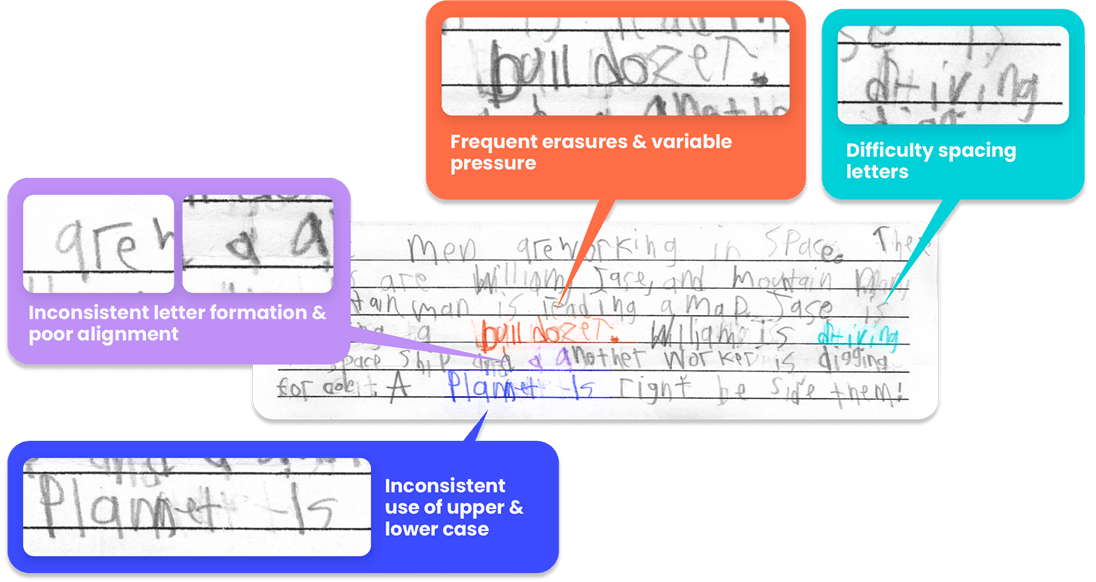
Common examples of dysgraphia include letters that are inconsistently sized or spaced, an awkward or overly tight pencil grip, slow and effortful handwriting,
and a noticeable gap between how clearly a child speaks and how hard writing feels for them.
Some children avoid writing tasks altogether simply because the physical act is so tiring.
These patterns are easy to write off as a phase or a lack of effort,
but they're often the first visible sign that a child needs testing for dysgraphia and targeted support.
For the full range of symptoms and how they compare to dyslexia, visit our dysgraphia resource page.
How Does Lexercise Test for Dysgraphia?
Dysgraphia testing typically involves a multi-hour assessment of a child’s fine motor skills, writing mechanics, spelling, and visual-spatial processing. The Lexercise dysgraphia assessment is meant as a preliminary exam, giving parents a fast, reliable way to test for dysgraphia risk from home, without needing to schedule an in-person evaluation first.
Know Exactly Where Your Child Stands
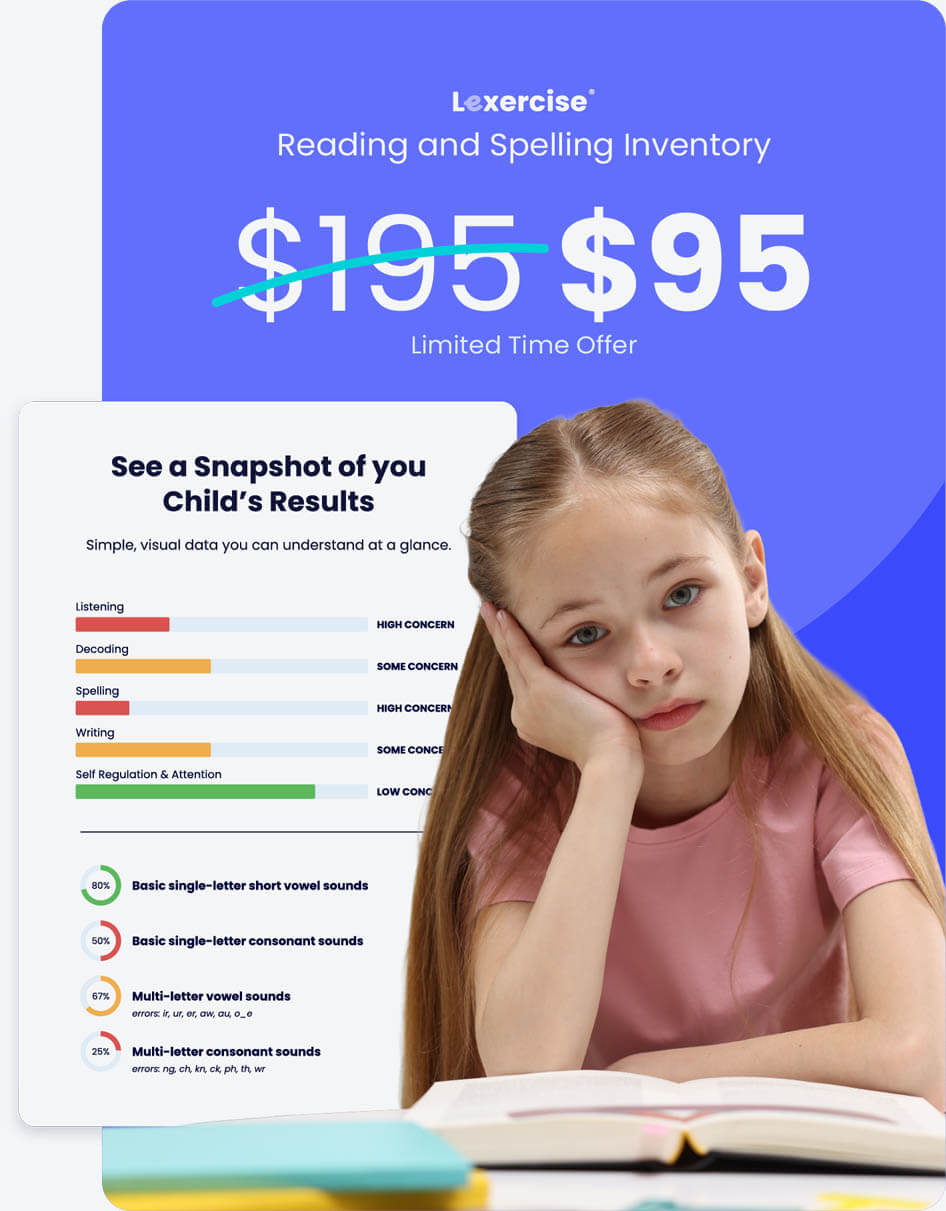
If your child is struggling, our popular Reading & Spelling Inventory tells you exactly what’s going on and what to do about it.
What’s included:
- 45-minute online session with a reading specialist
- Personalized 8-10 page report on your child’s reading and spelling skills
- Clear next steps and practical strategies
Get a $100 discount on the RSI if you sign up for it in the next 30 days. Just include RSI95 in the signup notes.

What Comes Next?
We recommend you create a Teacher’s Account.
We recommend you create your free teacher account to access our suite of student testing. It’s easy, convenient, and free, and it will allow you to test more than one student while keeping their information confidential.
Create Your Free Teacher Account
Looking to bring Lexercise to your school?
Print this one-pager and share it with your school administration. This document explains how our structured literacy platform can benefit struggling readers at your school.


Ashley C,
Lexercise Parent
“My son is Dyslexic, has Dysgraphia and ADHD, and year over year the interventions he was receiving at school weren't helping him... I highly recommend Lexercise to any family who is looking for a reading program that works and a therapist who cares. It is well worth the investment in your child's future. I highly recommend jumping in early when you first realize your child is struggling; I wish I could go back and do it over. However, I'm also an example of the fact that it's never too late to get your child the help they need to be successful academically.”
Finding Help for Dysgraphia in Children
If your answers suggest a risk for dysgraphia, we recommend a free 15-minute consultation with one of our structured literacy specialists.
From there, a more thorough evaluation can take a closer look at fine motor skills, letter and word formation, and overall writing fluency, giving you a clearer picture of what your child needs.