Through December 15: 40% off Basic Therapy. Use code FALL40 when you sign up. Have questions? Contact us today
Written by Sandie Barrie Blackley, Speech-Language Pathologist
Published on January 20th, 2023
“ The science of reading is a vast, interdisciplinary body of scientifically-based research about reading and issues related to reading and writing. This research has been conducted over the last five decades across the world, and it is derived from thousands of studies conducted in multiple languages. The science of reading has culminated in a preponderance of evidence to inform how proficient reading and writing develop; why some have difficulty; and how we can most effectively assess and teach and, therefore, improve student outcomes through prevention of and intervention for reading difficulties.” (The Reading League, 2022)As this definition suggests, there is growing consensus about how reading and writing skills develop and what can be done to help struggling readers and writers. In this article, we’ll have a look at this reading science.
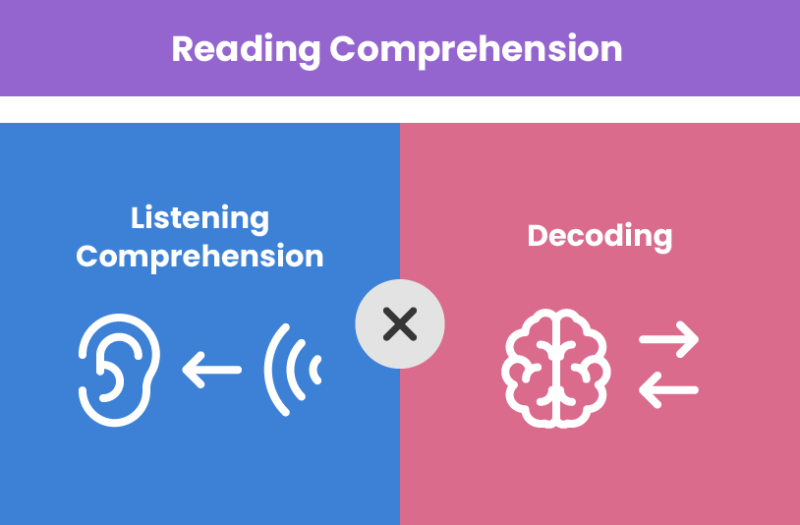 The process of learning to read has been described as a
virtuous cycle, with reading comprehension as the goal. The series of graphics below illustrate how these two components multiply in an expanding and increasing cycle.
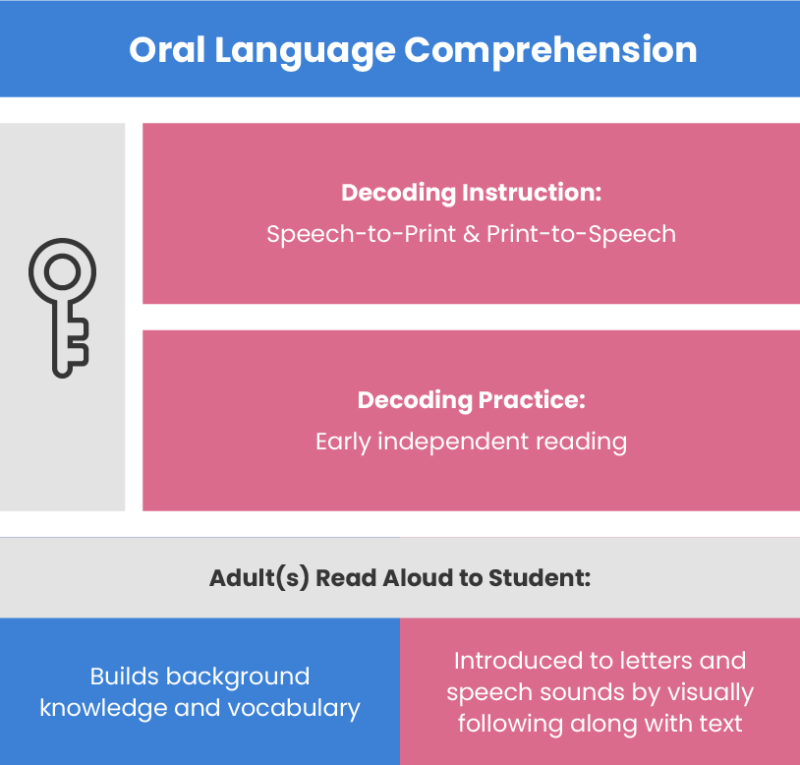 But more than just decoding instruction is needed. Books for beginning readers are naturally limited to simple vocabulary and concepts so the virtuous cycle is boosted when adults read aloud to the student. That helps the student build background knowledge and vocabulary through listening (the blue blocks on the graphic). The student’s decoding skills (the pink blocks on the graphic) are also boosted by following the text with their eyes as the adult pronounces words and occasionally talks about how letters represent speech sounds.
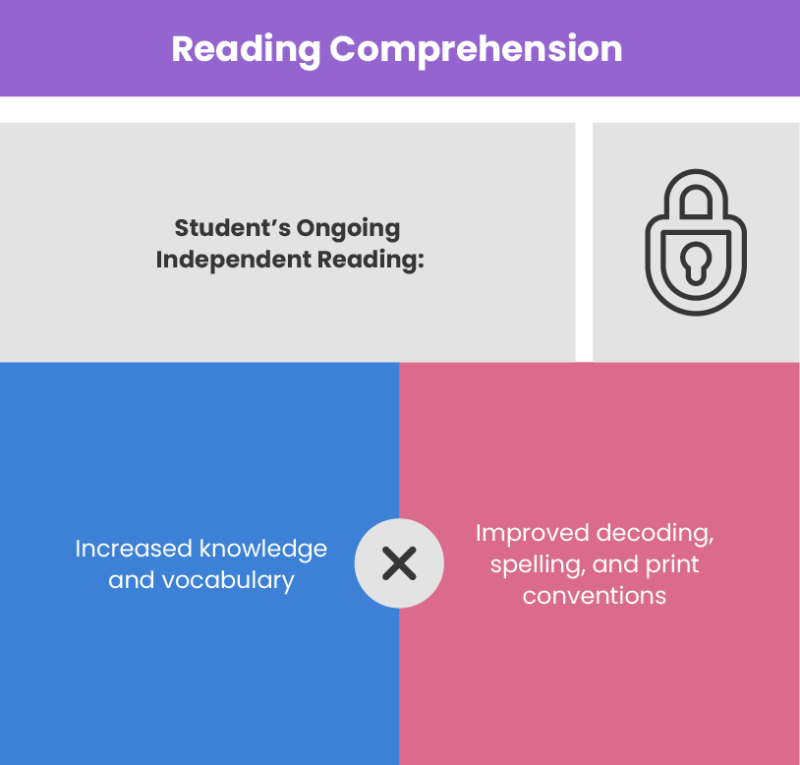 As
Natalie Wexler (2022) has pointed out, a knowledge-rich curriculum in content subjects is essential for full literacy. This is the science of reading, a virtuous cycle that results in proficient reading. It serves as a guide to instruction, differentiated for students at various stages in reading development and those with different types of reading disorders. The virtuous cycle moves from early reading instruction (on the right side of the graphic below) to using reading to learn (on the left side of the graphic below). The student who decodes accurately and fluently tends to find reading pleasurable and informative. Because it is relatively effortless and enjoyable, they read more. They read independently. Note the lock. The decoding key is absolutely necessary to unlock the cycle from here on. The more the student reads, the more knowledge and vocabulary they gain. The more they read the better they get at decoding, spelling, and print conventions. Of course, even proficient readers need a knowledge-rich curriculum and instruction in academic subjects.
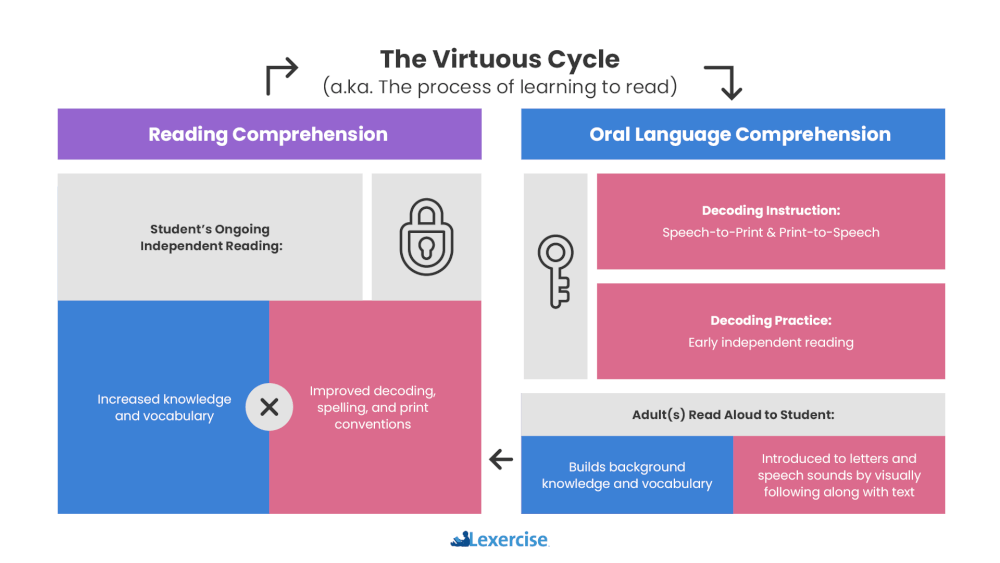
Table of Contents
Schedule a FREE
15-minute consultation