

Learning Disability Test
In the U.S. about 20% of students have learning challenges. Our learning disability test for kids is designed to help parents identify potential challenges that children with learning disabilities face. This comprehensive free test will help you understand your child's risk of learning difficulties, such as dyslexia, dysgraphia, and ADHD.
What Is a Learning Disability?
A learning disability is a brain-based condition that affects how a child takes in, processes, stores, and communicates information.
Here's what matters most: a learning disability has nothing to do with how smart your child is or how hard they're trying. Most kids with learning disabilities have average or above-average intelligence. The issue is a gap between how capable they are and how they're actually performing in certain subjects.

Why Test for Learning Difficulties?
Lexercise takes a clinical approach because we want to help kids and parents understand not just what the difficulty is, but why it's happening and how to work through it. Research shows this understanding helps children build:
- Self-awareness — knowing where their brain excels and where it hits a wall
- Self-advocacy — learning to speak up for what they need to succeed
- Compensatory skills — using memory strategies, technology, and their own strengths
- Emotional resilience — developing a growth mindset that treats mistakes as opportunities
Take Our Learning Disability Test for Children
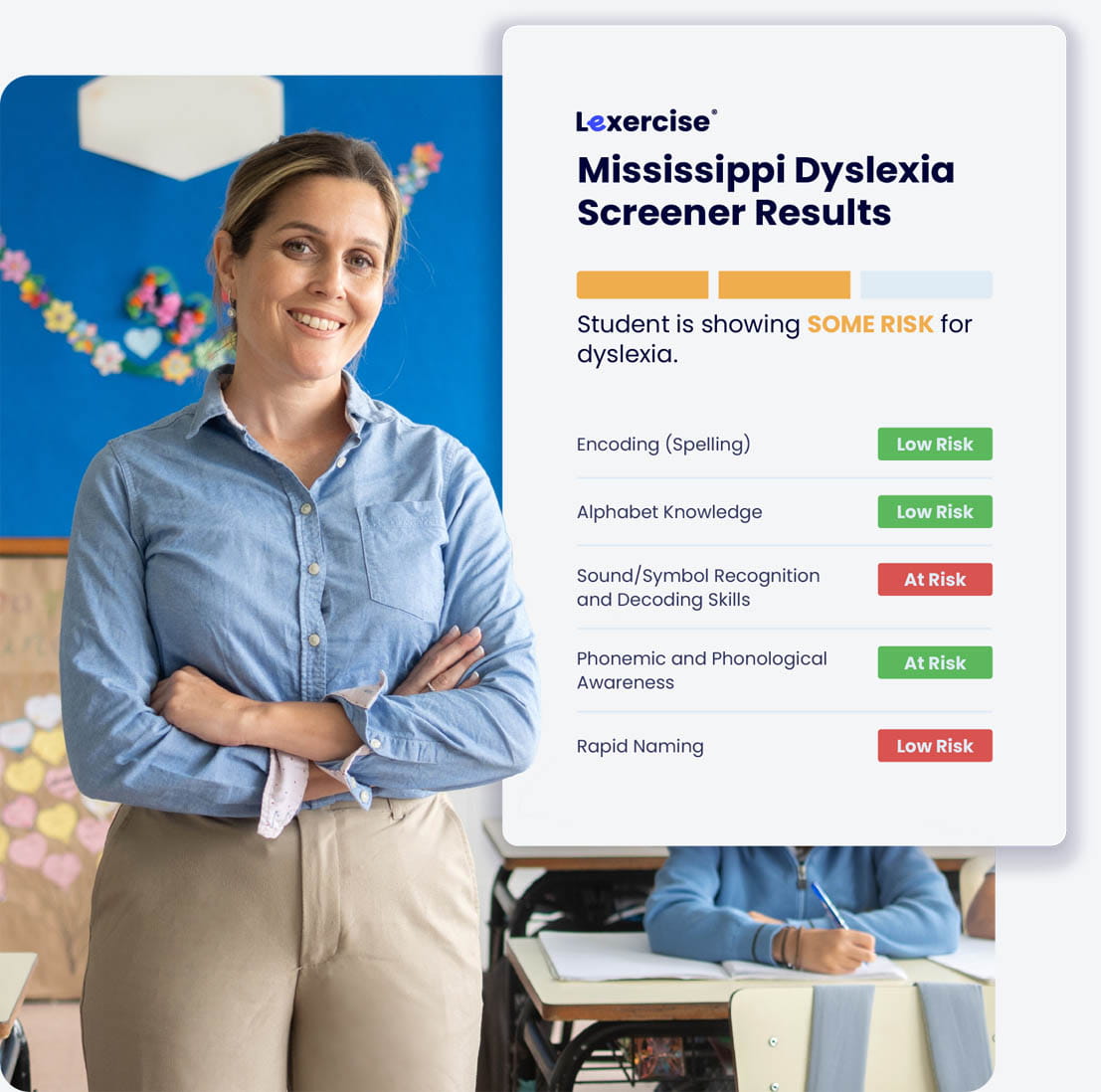
The free learning disability test below covers six key areas: Reading, Spelling & Writing, Math & Logic, Emotion & Self-Control, Listening, and Attention. Each section takes under 10 minutes, and your child doesn't need to be present.


Know Exactly Where Your Child Stands
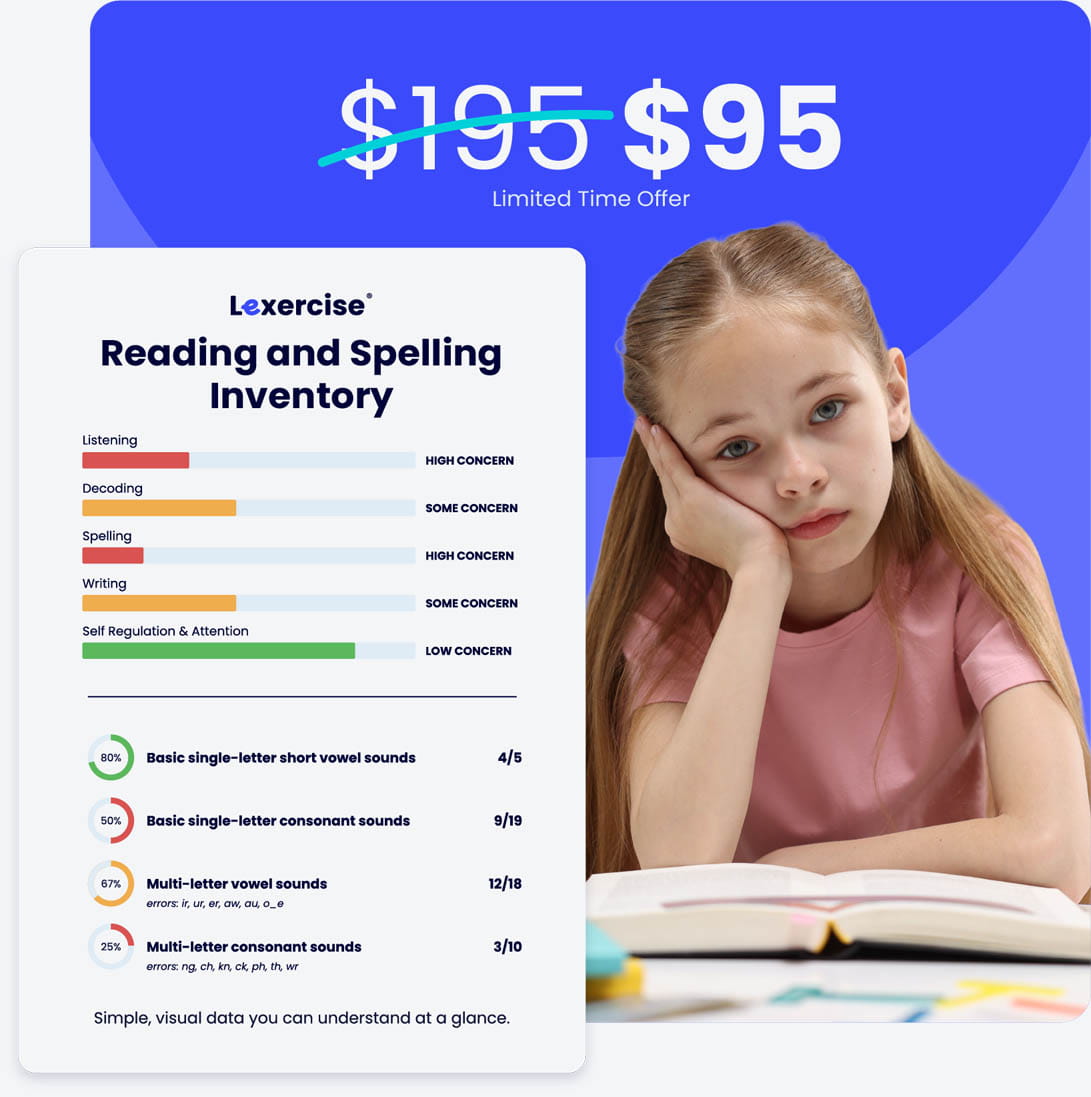
If your child is struggling, our popular Reading & Spelling Inventory tells you exactly what’s going on and what to do about it.
What’s included:
- 45-minute online session with a reading specialist
- Personalized 8-10 page report on your child’s reading and spelling skills
- Clear next steps and practical strategies
Get a $100 discount on the RSI if you sign up for it in the next 30 days. Just include RSI95 in the signup notes.


Heather Rentz,
Lexercise Parent
“The Lexercise program has been truly life changing for my daughter, who struggles with dyslexia. Through the program, she has gained so much confidence in her language skills and developed strategies that have made her a stronger and more independent reader and writer. I gained a deeper understanding of how my daughter learns and picked up valuable tools to continue supporting her growth. I only wish all my children could experience this level of thoughtful and personalized instruction.”
Clinical vs. School Testing: What's the Difference?
You may notice that schools and clinics use different terms when discussing learning disabilities, and that can feel confusing.
That's because testing for learning disabilities looks different depending on the setting, and each one is looking at your child through a different lens.
A clinical evaluation looks at the whole picture. It asks what the difficulty is, why it's happening, and how to help your child succeed in daily life.
A school evaluation has a narrower focus: how the condition affects classroom performance, since that's what determines the support the school can provide. For example,
a clinical evaluation might identify a child's reading struggles as a language based learning disability, such as dyslexia or dysgraphia, and try to pinpoint the specific cause.
A U.S. school, on the other hand, might classify the same child under the broader category of Specific Learning Disability (SLD),
without needing to name the cause. Neither approach is wrong. They simply serve different purposes.

What’s Next?
If this test suggests your child might be at risk for a learning disability, you can talk to a Lexercise specialist to figure out exactly what's going on. You can also have your child take one of these more specific learning disability assessments to dig deeper on your own: