Written by Sandie Barrie Blackley, Speech-Language Pathologist
Published on April 3rd, 2026
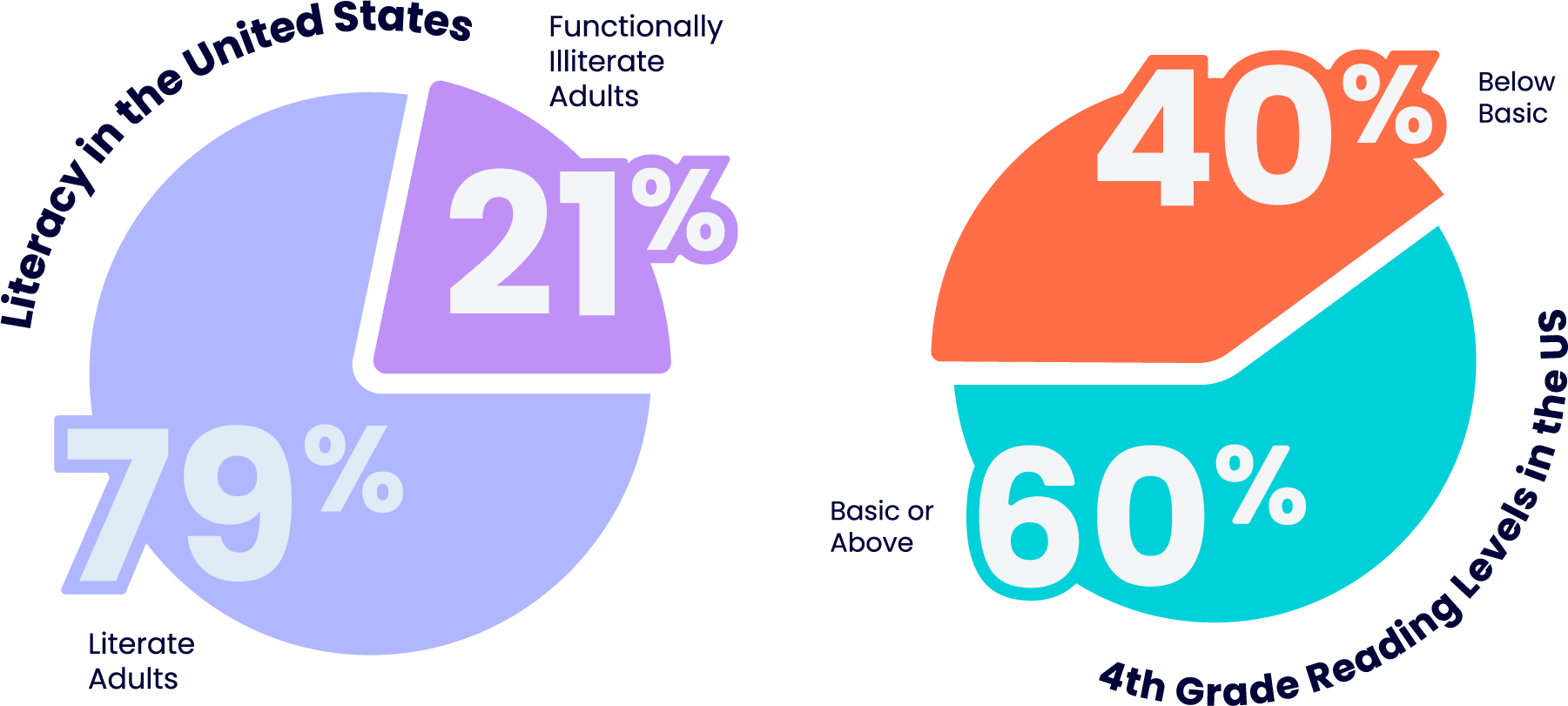
In the United States, 21% of adults are functionally illiterate. The vast majority of those adults were children with below basic reading proficiency in elementary school. People who read at a below basic level may be able to read signs, simple instructions, or text messages—but they struggle to use reading for any complex task. They spend so much mental energy trying to identify the words (decoding) that they have no mental bandwidth left over for comprehending meaning. This is not a new problem in America. The percentage of illiterate adults and the related percentage of children reading at a below-basic level has remained essentially unchanged for decades.
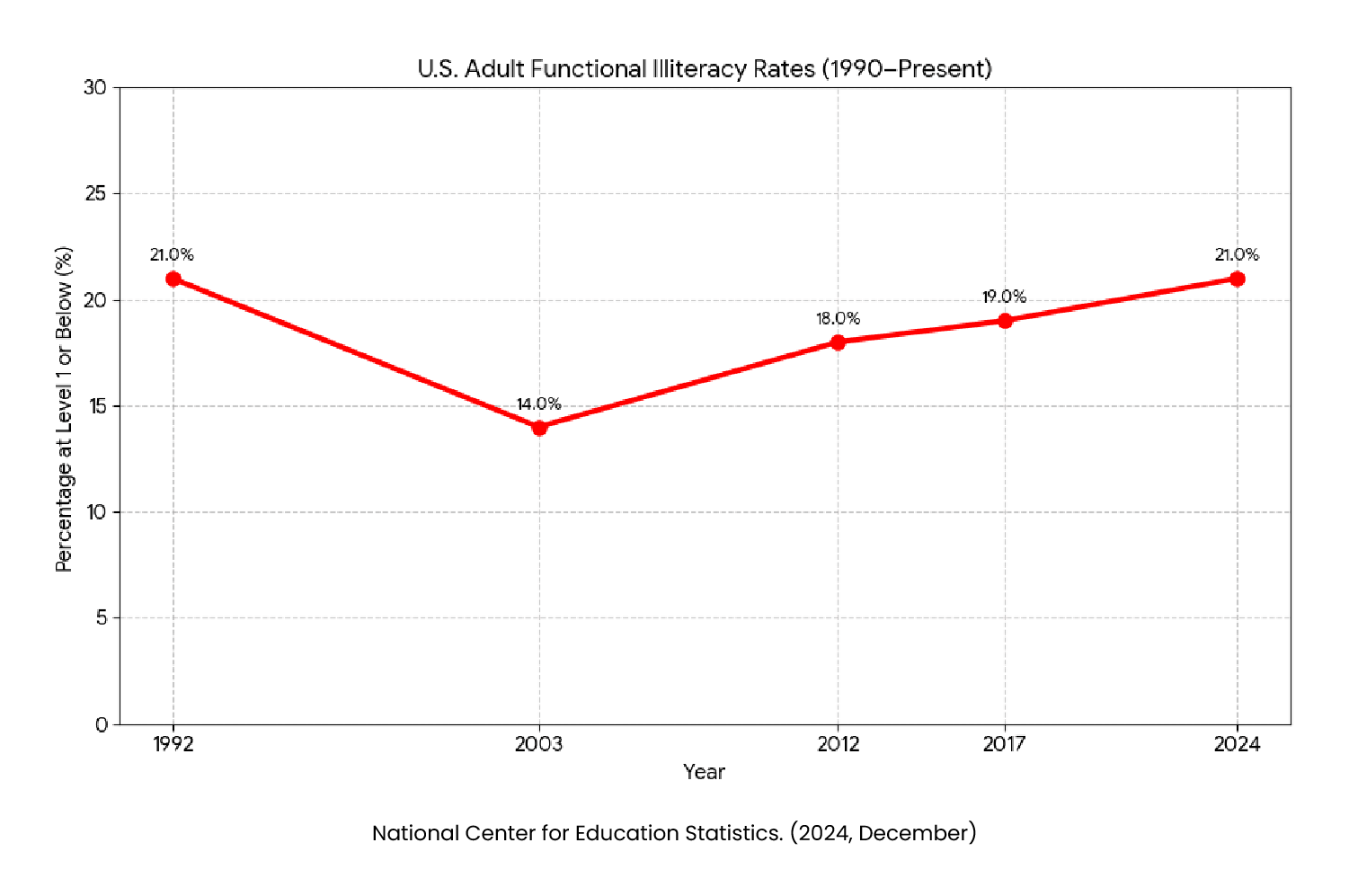
Recent data from the Program for the International Assessment of Adult Competencies (PIAAC) suggests adult illiteracy rates are actually climbing in the USA.
In recent years, there has been a shift toward the more science-backed structured literacy methods for teaching foundational reading skills and away from balanced literacy approaches, which often rely on using context clues for guessing (Owen, 2025). As part of this shift, many states and school districts have mandated that elementary school teachers participate in LETRS training.
Language Essentials for Teachers of Reading and Spelling (LETRS)* is a professional development program for educators, developed by renowned literacy experts Dr. Louisa Moats and Dr. Carol Tolman, and managed by educational technology corporations.
The program is taught in a series of workshops totaling 40-60 hours, usually scheduled over a two-year period. LETRS is designed to deepen educators' understanding of the structure of written English and the Science of Reading. But since the training takes two years to complete, its impact on students' reading proficiency scores is delayed and can be difficult to discern.
Five southern states (Mississippi, South Carolina, North Carolina, Arkansas, and Alabama) mandated LETRS training for teachers three or more years ago. The National Assessment of Educational Progress (NAEP) scores improved in those states between 2013 and 2024, but the percentage of 4th-graders reading at a below basic level in those five states remains stubbornly high, averaging 41% and matching the national average. And only in Tennessee was there statistically significant growth in 8th-grade reading proficiency between 2022 and 2024. In Alabama, 8th-grade scores hit their lowest level in state history in 2024. It is clear from this data that while teacher training is an essential part of the solution, it is inadequate to combat illiteracy in America.
Teachers who have engaged in LETRS training generally describe it as valuable but grueling. Research in North Carolina, one of the states that has mandated LETRS training, suggests that participating teachers often feel burnt out by the requirement to complete intensive modules on top of their full-time teaching duties. While researchers found that LETRS improved teacher knowledge, this did not necessarily translate into high-quality teaching. (See Bell 2025.) That is understandable because LETRS is not a curriculum for children. Teachers still have to teach!
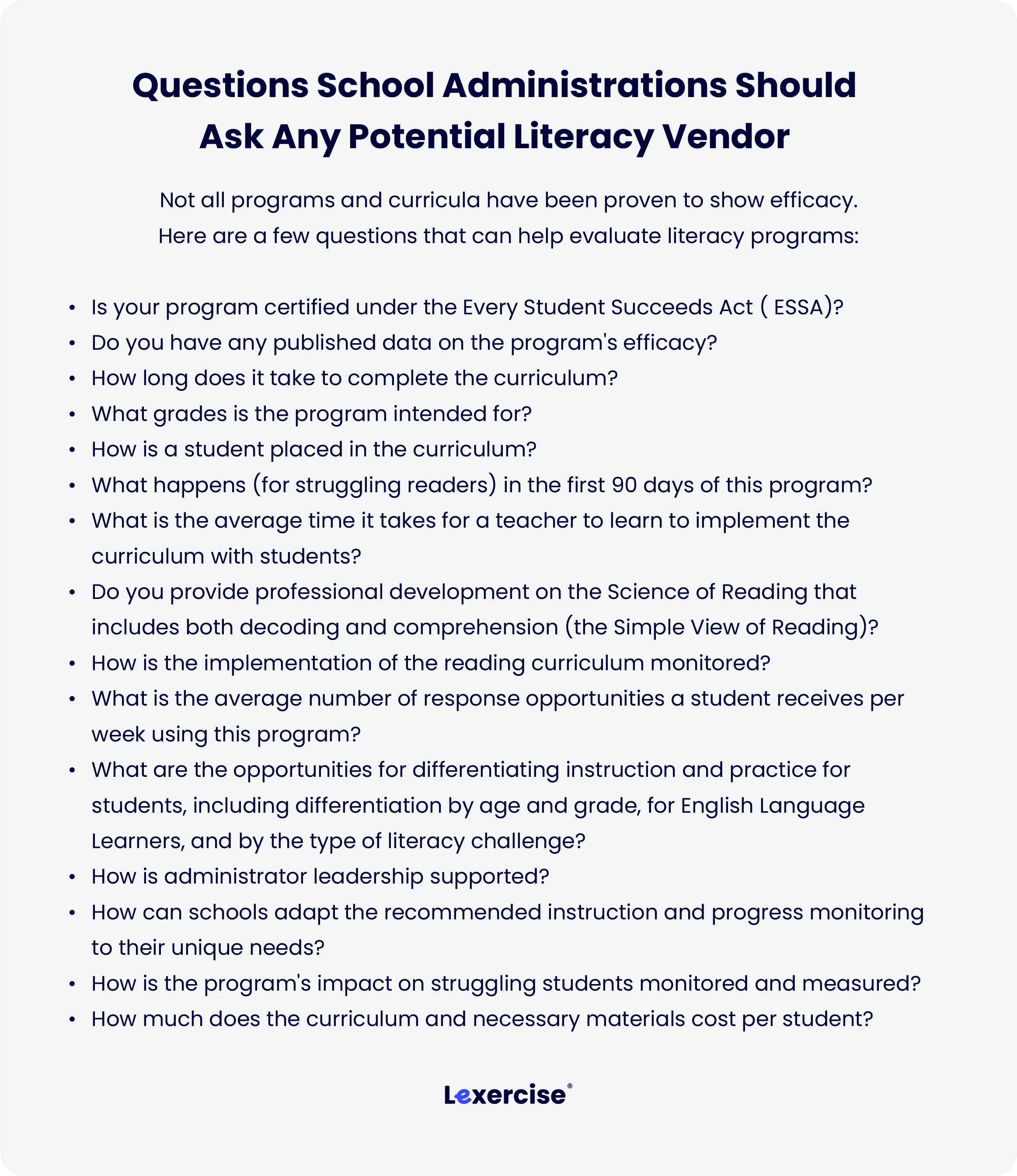
In a recent blog post (2026, March 18), the Reading League provided the following guidance for schools that are selecting a literacy vendor that is focused on improving literacy outcomes for students:
To have a meaningful impact, there must be a focus on the purposes of reading, not just the process. Of course, foundational reading skills such as decoding and reading fluency must be a priority in early elementary school (K-3) and for all older students who have not yet developed them. However, proficient literacy requires more than decoding. Background knowledge and vocabulary are essential. (See What Does Reading on Grade Level Mean?)
Proficient reading in middle school and beyond requires reading for increasingly complex and specific purposes, to gain information, to understand and participate in the world, and to manage one's life and well-being. This requires endurance and learning how to navigate new words, new concepts, and complex material. Effective LETRS application means accessing and using curricula, creating lesson plans, assembling materials, engaging students in lessons, monitoring student progress, identifying struggling students, determining how to help each, and communicating all of this to stakeholders, including parents and school administrators. It's a tall order that goes way, way beyond LETRS training!

As the Reading League article points out, "Workshops alone rarely change outcomes."
Lexercise for Schools™ interweaves professional development with a structured literacy curriculum and instructional materials and resources, so it's all part of one coherent system, including:


References
Bell, L. (2025, October 13). Teachers need coaching, ongoing training to move from ‘science of reading' knowledge to practice, researchers suggest. EdNC.https://www.ednc.org/2025-10-13-teachers-need-coaching-ongoing-training-to-move-from-science-of-reading-knowledge-to-practice-researchers-suggest/
Kahloon, I. (2024, October 14). America is sliding toward illiteracy. The Atlantic. https://www.theatlantic.com/ideas/archive/2025/10/education-decline-low-expectations/684526/
National Center for Education Statistics. (2024, December). Highlights of the 2023 U.S. PIAAC Results: Literacy, Numeracy, and Adaptive Problem Solving. Institute of Education Sciences. https://ies.ed.gov/learn/press-release/u-s-adults-score-par-international-average-literacy-skills-below-international-average-numeracy-and
Owen, D. (2025, December 22). Annals of Education: Dyslexia and the Reading Wars. The New Yorker. https://www.newyorker.com/magazine/2025/12/29/dyslexia-and-the-reading-wars
The Reading League. (2026, March 18). Choosing a professional learning partner: 5 questions to ask. The Reading League Blog. https://www.thereadingleague.org/blog/choosing-a-professional-learning-partner-5-questions-to-ask/
* LETRS® (Language Essentials for Teachers of Reading and Spelling) is a registered trademark of Voyager Sopris Learning, Inc., which is part of Lexia Learning (a Cambium Learning® Group company). Mind InFormation, Inc. is not affiliated with, sponsored by, or endorsed by Lexia Learning.
Schedule a FREE
15-minute consultation